Finance
What Is Loss of Use Coverage and Do You Need It?
Coverage D pays the extra cost of living somewhere else while your home is repaired — but only up to a percentage cap, and only for a set number of months.
By Renata Ibarra · Oct 06, 2026 · 9 min read
Loss of use coverage — printed on most policies as Coverage D or Additional Living Expenses (ALE) — is the part of a homeowners or renters policy that pays for a motel, a short-term rental and other added costs when a covered loss makes your home unfit to live in. It is a standard part of homeowners insurance (Farmers Insurance (citing Insurance Information Institute), undated), so for most people the question is not whether to add it but whether the built-in cap is big enough and lasts long enough.
Two things decide that: a dollar cap set as a percentage of another coverage on your declarations page, and a clock, usually 12 to 24 months (Washington State Office of the Insurance Commissioner, undated). This guide explains what triggers a payout, what the standard form excludes, how the limit is calculated, and who should pay to raise it.
What It Actually Covers
The payout trigger is narrow and specific: a peril your policy covers has to make the home unfit to live in, or a civil authority has to bar you from it. Nothing pays out because the house is inconvenient or because you would rather not be there.
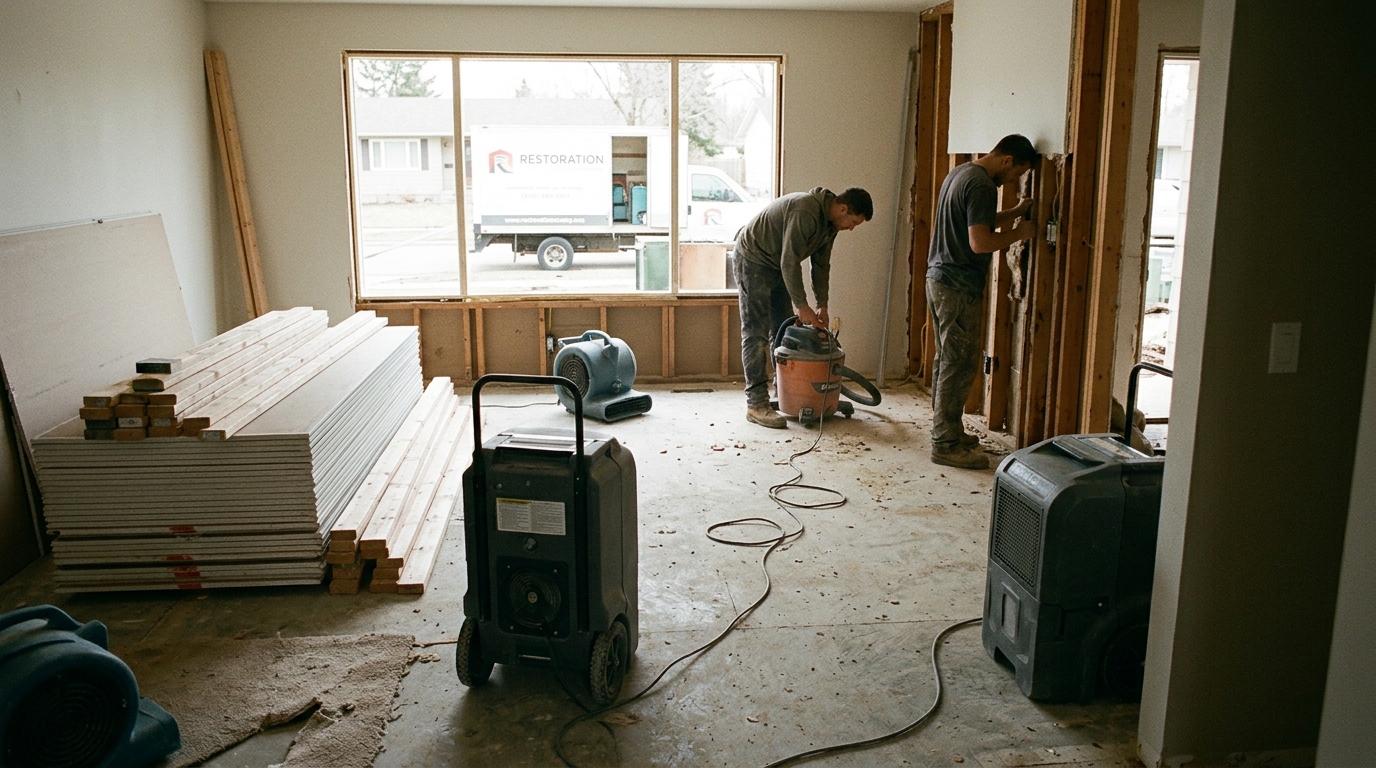
Picture a grease fire in the kitchen of a suburban three-bedroom insured for $300,000 in dwelling coverage. The flames are out in ten minutes, but smoke and water damage leave the kitchen and two walls unusable, and the restoration contractor says five months. Coverage D is what reimburses the motel for the first two weeks, the short-term rental after that, the pet boarding, the laundromat, the storage unit for furniture, and the extra mileage if the rental is further from work than your house was. Industry definitions describe this as the cost of maintaining a comparable standard of living that exceeds your normal pre-loss expenses — a motel bill while fire damage is repaired is the textbook example (International Risk Management Institute, undated).
The word doing the work is additional. ALE pays the increase, not the total. If groceries normally run $150 a week and rise to $250 while you are eating out of a hotel microwave, the reimbursement is the $100 difference (Amica Mutual Insurance, undated).
The cap is set as a percentage of a coverage you already bought, which varies by policy form:
- Under homeowners forms HO 2, HO 3 and HO 5, ALE is limited to 30 percent of the dwelling limit (International Risk Management Institute, undated). On that $300,000 house, that is a $90,000 ceiling.
- Many carriers and the Insurance Information Institute describe a typical limit of 20% of dwelling coverage — a $200,000 home giving a $40,000 loss of use limit (Farmers Insurance (citing Insurance Information Institute), undated).
- Under form HO 8, used for some older homes, ALE is limited to 10 percent of the dwelling limit (International Risk Management Institute, undated).
On top of the dollar cap sits a time cap, usually 12 to 24 months (Washington State Office of the Insurance Commissioner, undated). Whichever runs out first ends the payments. One thing the cap does not do is eat into your rebuild money: ALE limits and time limits have no impact on the amount available to rebuild the structure or replace belongings (Insurance Information Institute, 2018). If you are displaced and short of cash, United Policyholders advises renters with an open claim to ask the insurer for an advance of the Coverage D benefit rather than paying out of pocket and waiting on receipts (United Policyholders, undated).
What It Does Not Cover
- Flood and earthquake damage. Loss of use follows the peril. Standard homeowners forms exclude flooding and earthquake, which require separate flood or earthquake policies (Openly, undated) — and ALE is not incorporated into FEMA's National Flood Insurance Program policies at all (Business Wire (citing Insurance Information Institute), 2024). A flooded house can leave you displaced with no ALE benefit from either policy.
- Evacuations you choose yourself. The civil authority clause requires an order. Coverage D does not apply to evacuations the policyholder decides to make when no civil authority has ordered one (Amica Mutual Insurance, undated).
- Your normal mortgage payment, rent and baseline utilities. These are pre-loss expenses, not additional ones. ALE does not cover a homeowner's normal mortgage or rent payment or normal utility costs at the damaged home (Washington State Office of the Insurance Commissioner, undated).
- Lodging above your pre-loss standard, and unrelated spending. The "comparable standard of living" wording caps you at an equivalent, not an upgrade. Luxury lodging beyond your normal standard and unrelated shopping or entertainment costs are not covered (Washington State Office of the Insurance Commissioner, undated).
- Damage from wear and tear, pests or neglect. The maintenance and neglect exclusions mean these are never a covered peril, so Coverage D is never triggered. Standard Coverage D typically excludes normal wear and tear, pest infestations and preventable damage (Openly, undated).
- Anything past the dollar cap or the clock. Once you hit the percentage limit or the 12-to-24-month time limitation, payments stop even if the rebuild is unfinished (Washington State Office of the Insurance Commissioner, undated).
What It Costs
Loss of use is rarely priced as a separate line item. It comes bundled into the base policy, and its size is set by the percentage formula attached to your policy form — so the way to "buy more" is usually to raise the underlying coverage or buy an endorsement extending the time limit. The table shows what the standard formula produces at different coverage levels. Every figure is an illustration of the published formula, not a quote; your actual limit depends on your policy form, your declarations page and your carrier.
| Policy type and example coverage | Cap mechanism | Example loss of use limit |
|---|---|---|
| HO 3 homeowners, $300,000 dwelling | 30% of dwelling limit [a] | $90,000 |
| Homeowners, $200,000 dwelling, 20% form | 20% of dwelling limit [b] | $40,000 |
| HO 8 homeowners, $200,000 dwelling | 10% of dwelling limit [a] | $20,000 |
| HO 6 condo, $100,000 building + $30,000 contents | 20% of combined building and personal property [b] | $26,000 |
| HO 6 condo, $30,000 personal property | 50% of personal property limit [a] | $15,000 |
| HO 4 renters, $40,000 personal property | 30% of personal property limit [a] | $12,000 |
| Renters, flat-amount policies | Flat dollar figure [c] | Often $3,000 to $5,000 |
| Renters, percentage-based at one insurer | Up to 40% of personal property limit [c] | $16,000 on $40,000 contents |
As for the premium the whole package sits inside: the average U.S. homeowners insurance expenditure was $1,559 in 2022, the most recent year of NAIC data available, up 10.5 percent from 2021 (Insurance Research Council (citing NAIC data), undated). That is a national average across all coverage levels and states, not a price for Coverage D, and your own premium turns on state, construction, claims history, deductible and dwelling limit.
Footnotes — [a] ISO homeowners form limits as described by the International Risk Management Institute, undated. [b] Carrier explanation citing the Insurance Information Institute (Farmers Insurance), undated; ALE limits of 20% to 30% of dwelling coverage with 12-to-24-month time limits also per the Washington State Office of the Insurance Commissioner, undated. [c] Carrier description of renters loss of use structures (Progressive, undated), including up to 40% of the personal property limit at ASI, an insurer in that carrier's network.
Is It Worth Adding
Since loss of use is standard on homeowners and renters policies (Business Wire (citing Insurance Information Institute), 2024), the live decision is whether to pay to extend it.
Worth the extra premium if you own in a wildfire or hurricane region where rebuilds queue. After a widespread disaster, contractors and permits back up, and a 12-month ALE clock can expire with the framing half up. Colorado's insurance regulator requires insurers issuing or renewing a replacement-cost homeowners policy to give consumers the opportunity to buy ALE coverage for a total of 24 months (Colorado Division of Insurance, 2018) — where that option exists, it addresses a concrete exposure: paying rent on a second home out of pocket for months 13 through 24.
Worth it if you rent in a high-cost metro and your policy uses a flat amount. A flat $3,000 to $5,000 limit (Progressive, undated) can be swallowed by a security deposit, first month's rent and a moving truck before the smoke smell is out of your old unit. Switching to a percentage structure — up to 40% of personal property coverage at one insurer (Progressive, undated) — is usually a small premium change against a much larger gap.
Not worth paying more if your home sits on an HO 8 form and you have a standing place to stay. The 10 percent dwelling cap (International Risk Management Institute, undated) is the form's design, and raising it has limited value if a displacement would mean moving into a relative's spare room across town, where your only additional costs are groceries and mileage. Remember ALE pays only the increase over normal spending (Amica Mutual Insurance, undated), so a free place to sleep shrinks the claim dramatically.
Not worth it for a weekend condo you do not live in. If your primary residence is 90 minutes away and a kitchen leak closes the condo, you simply stay home — no additional living expense is triggered, so a bigger Coverage D limit buys nothing. A unit owner with, say, $20,000 in liquid savings and no dependents housed there is better off spending the premium on building property coverage, which is what actually funds the repair (Insurance Information Institute, 2018).
Frequently asked questions
How long will loss of use pay for a hotel?
Until the dollar cap or the time cap runs out, whichever comes first. Time limits are usually 12 to 24 months (Washington State Office of the Insurance Commissioner, undated). Colorado requires insurers issuing or renewing replacement-cost homeowners policies to offer ALE for a total of 24 months (Colorado Division of Insurance, 2018).
Does loss of use cover my mortgage payment while I am displaced?
No. ALE excludes your normal mortgage or rent payment and normal utility costs at the damaged home (Washington State Office of the Insurance Commissioner, undated). It pays only the increase over pre-loss spending — if groceries go from $150 to $250 a week, you are reimbursed the $100 difference (Amica Mutual Insurance, undated).
Is loss of use included in flood insurance?
No. Additional living expenses are not incorporated into FEMA's National Flood Insurance Program policies (Business Wire (citing Insurance Information Institute), 2024), and standard homeowners Coverage D excludes flood and earthquake damage, which need separate policies (Openly, undated). Flood displacement costs typically come out of your own pocket.
Will using loss of use reduce the money I get to rebuild?
No. ALE coverage limits and any time limitation have no impact on the amount available to rebuild the structure or replace damaged belongings (Insurance Information Institute, 2018). They are separate limits on the declarations page — a $90,000 ALE cap on a 30% form sits alongside, not inside, your dwelling coverage.
Can I get money before I submit receipts?
You can ask. United Policyholders advises renters with an open claim to request an advance of their Coverage D / Loss of Use benefit (United Policyholders, undated). Keep every receipt regardless, since reimbursement is capped at the increase over normal costs and at 20% to 30% of dwelling coverage on most homeowners forms.
Sources
- Farmers Insurance (citing Insurance Information Institute) — What Is Loss of Use Coverage?
- Business Wire (citing Insurance Information Institute) — Insurance Information Institute flood season preparedness release (2024-02)

Written by
Renata Ibarra
Renata shapes the publication's voice and keeps its coverage honest when markets get loud. She edits with a focus on precision, especially around risk and uncertainty. She also writes occasional essays on how financial language shapes financial behavior.