Finance
Understanding Actual Cash Value on Your Homeowners Policy
Depreciation is the whole story: how insurers price a settlement on a 16-year-old roof, which losses they skip entirely, and what the alternative costs.
By Priya Chandrasekaran · Oct 06, 2026 · 9 min read
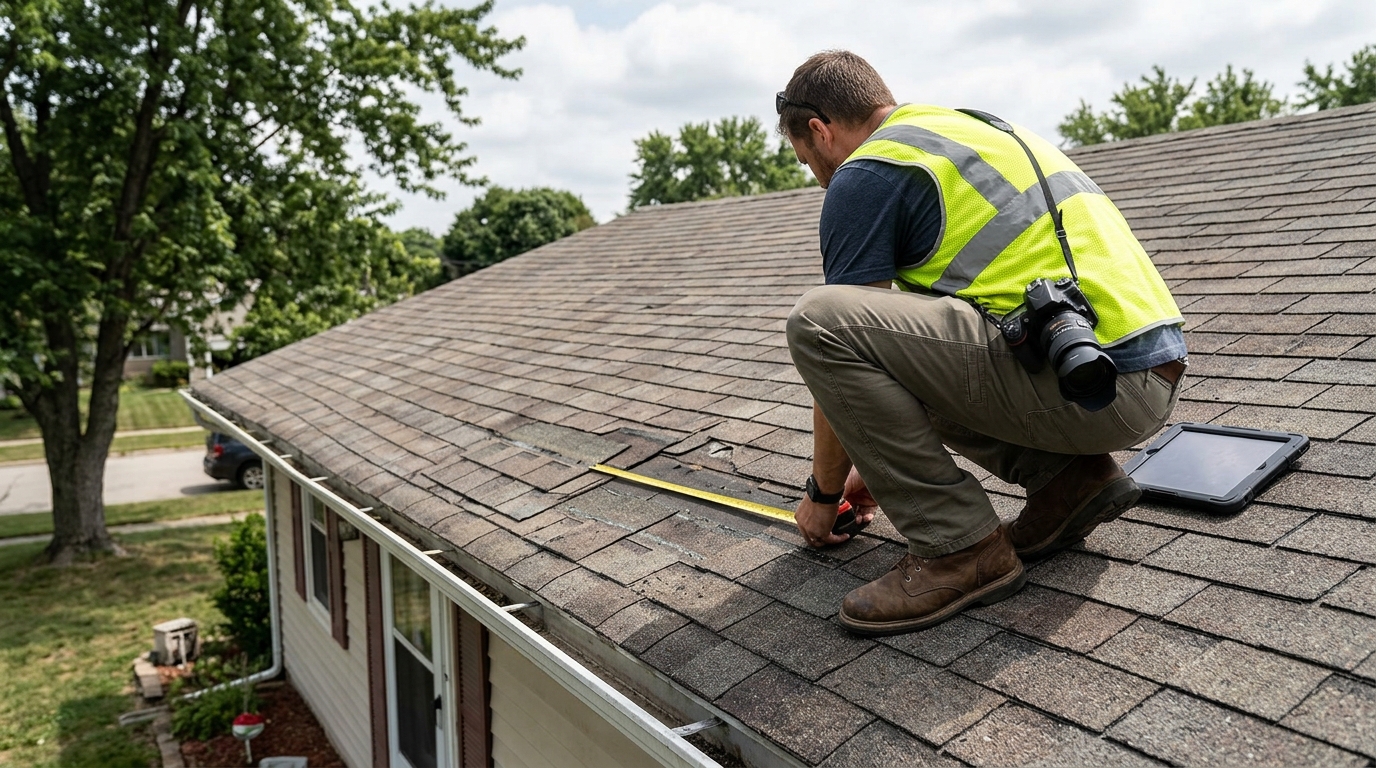
Actual cash value (ACV) is a way of settling a claim, not a separate coverage. It pays what the damaged property was worth the moment it was destroyed — replacement cost minus depreciation for age and wear — then subtracts your deductible. On a roof or a ten-year-old sofa, that gap can be most of the bill.
This guide walks through how the arithmetic works, which losses a standard policy will not pay for on any settlement basis, what the premium differences look like in published averages, and who is better off paying more for replacement cost instead.
What It Actually Covers
FEMA defines actual cash value as "the cost to replace an insured item of property at the time of loss, less the value of physical depreciation" (FEMA, FloodSmart.gov, undated). A carrier version says the same thing in claim language: the cost to repair or replace with like kind and quality, less depreciation (NJM Insurance Group, undated).
The payout trigger is narrow. Money moves only when a peril your policy names — hail, windstorm, fire, a sudden burst pipe — damages covered property, and only for the amount above your deductible. ACV then decides how much of that damage the insurer values.
Picture a June hailstorm over a suburban Kansas City subdivision that shreds a 16-year-old three-tab asphalt roof. A contractor bids to replace it. Under a replacement cost settlement, that bid (minus deductible) is the target. Under ACV, the adjuster first subtracts the value the roof had already used up over 16 years. A carrier's published illustration shows the shape of it: $10,000 in damage minus 30% depreciation ($3,000) equals $7,000, minus a $1,000 deductible equals a $6,000 payout (Yahoo Finance Personal Finance, undated). Contents depreciate faster. One carrier's worked example of a $10,000 computer, four years into a 10-year useful life, shows $4,000 of depreciation, a replacement cost value of $6,000 and an actual cash value of $2,000 (The Hartford, undated). There is no standardised depreciation schedule across the industry — adjusters apply their own guidelines and visual assessment (United Policyholders, undated), so the percentage is negotiable and varies by carrier and state.
Two percentage rules matter. Standard homeowners policies carry a coinsurance "80% rule": a home with a $300,000 replacement cost insured for $240,000 meets the threshold for full replacement-cost payment, and insuring below that cuts the payout proportionally (Liberty Mutual, undated). Under the NFIP's Standard Flood Insurance Policy, ACV settlement applies to a dwelling when, at the time of loss, the insurance is both less than 80% of full replacement cost and less than the maximum NFIP coverage available (FEMA, 2021) — though FEMA proposed in February 2024 shifting the Homeowner Flood Form's default to replacement cost value (Federal Register/FEMA, 2024-02-06).
State law can set the standard outright. In California, the measure of recovery for a loss requiring repair, rebuilding or replacement of like kind and quality is set out in Insurance Code Section 2051, alongside Section 2071 (United Policyholders, undated).
On a replacement cost policy, the insurer still pays the ACV figure first and withholds "recoverable depreciation," releasing the remainder only once you complete the repair or replacement (Yahoo Finance Personal Finance, undated). The number of days you have to finish that work is written into the loss settlement provision and differs by carrier and state — ask the adjuster for the exact figure in writing when the first check issues.
What It Does Not Cover
Settlement basis does not widen the list of covered perils. A standard homeowners policy excludes these regardless of whether you hold ACV or replacement cost:
- Flooding and ground water. Water that seeps up from the ground into the foundation is excluded under the water damage exclusion as flood damage, while water from a burst pipe or a defunct water heater is typically covered (Policygenius, undated). Outside-water flooding needs a separate flood policy (GEICO, undated).
- Earth movement. Earthquakes and sinkholes fall under the earth movement exclusion and require a separate policy or endorsement (GEICO, undated).
- Normal wear and tear or neglect. The maintenance exclusion means a roof that has simply aged out, or a long-term leak you did not repair, is not a sudden covered loss (Policygenius, undated; GEICO, undated).
- Mold and wet rot tied to ongoing moisture. Mold traced to a continuing leak rather than a sudden covered event is excluded (GEICO, undated).
- Pest infestation. Termite and rodent damage is excluded as a preventable maintenance issue (GEICO, undated).
- Power surges caused by the utility company. Utility-side surges fall outside the named perils on a standard form (Policygenius, undated).
What It Costs
ACV is not a line item you pay for — it is the cheaper default. Most policies provide replacement cost on the dwelling and other structures by default, while personal property is commonly settled on an actual cash value basis unless you upgrade to replacement cost personal property coverage, which carries a higher premium (Policygenius, undated). The table below shows how published average premiums move with the levers that sit next to that choice. Every figure is an average, not a quote; your own number depends on state, ZIP code, home age, claims history, coverage limit and carrier.
| Rating factor | Average annual premium | Source type |
|---|---|---|
| $500 deductible | $2,659 | Quote-aggregator data (a) |
| $1,000 deductible | $2,417 | Quote-aggregator data (a) |
| $5,000 deductible | $2,055 | Quote-aggregator data (a) |
| $10,000 deductible | $1,934 | Quote-aggregator data (a) |
| $200,000 dwelling limit | $2,052 | Quote-aggregator data (b) |
| $300,000 dwelling limit | $2,808 | Quote-aggregator data (b) |
| $500,000 dwelling limit | $4,332 | Quote-aggregator data (b) |
| $750,000 dwelling limit | $6,204 | Quote-aggregator data (b) |
| $100,000–$124,999 dwelling coverage | $926 | Regulator-sourced average (c) |
| $300,000–$399,999 dwelling coverage | $1,336 | Regulator-sourced average (c) |
| $500,000 and above dwelling coverage | $2,224 | Regulator-sourced average (c) |
| Southeast region, 2024 | $1,818 | Regulator data via news analysis (d) |
| Northeast region, 2024 | $1,396 | Regulator data via news analysis (d) |
| Typical US homeowner, 2024 | $3,303 | Industry pricing data by ZIP (e) |
Footnotes: (a) and (b) quote-aggregator averages (Insurify, 2026). (c) NAIC-sourced averages by dwelling coverage amount, cited by a carrier publication (Hippo, 2024). (d) NAIC data reported by CNBC for 2024; the same analysis shows inflation-adjusted premiums up 18% in the Northeast, 25% in the Midwest, 27% in the Southeast and 43% in the West from 2018 to 2024. (e) Proprietary industry pricing data analysed by ZIP code (Consumer Federation of America, 2025-04-01), which also found a $648 increase since 2021. Aggregator quote averages and regulator filed-premium averages are built differently and are not directly comparable. None of these averages isolate the cost of an ACV versus replacement cost contents endorsement — ask your agent to quote both versions of the same policy side by side.
Is It Worth Adding
Worth staying on ACV contents. You own a two-bedroom rental duplex you furnished from estate sales — the full contents would cost maybe $12,000 to replace new, and you hold $25,000 in liquid savings. A total contents loss settled at ACV might pay a few thousand dollars, and you can absorb the rest without borrowing. Paying a higher premium every year to protect a gap you could cover in cash is a poor trade.
Also worth staying on ACV. You live in a condo where the association's master policy handles the structure, your unit's belongings are modest and mostly over ten years old, and you are on a fixed income where a lower annual premium matters more than a larger one-time settlement. Depreciation on decade-old furniture is steep either way; the upgrade buys back less than it costs over several years.
Not worth it — upgrade instead. Your roof is 16 years old and you live in a hail belt where the subdivision has been hit twice in five years. Depreciation is applied by age against expected useful life, with no standardised schedule across carriers (United Policyholders, undated), so an ACV settlement on an aged roof can leave you funding most of a five-figure replacement yourself. If your savings cannot absorb that gap, the premium difference is the cheaper risk.
Also not worth it. You have three children, replaced your appliances, electronics and furniture within the last four years, and keep under $5,000 in accessible savings. A kitchen fire that destroys $60,000 of near-new contents would settle for a fraction of that under ACV — the carrier example of a four-year-old $10,000 computer carrying $4,000 of depreciation (The Hartford, undated) shows how fast contents lose insured value. Replacement cost contents coverage, plus a higher deductible to offset the premium, puts the money where the exposure is.
Separately, check the 80% coinsurance threshold on the dwelling itself. A home with a $300,000 replacement cost must be insured for at least $240,000 to qualify for full replacement-cost payment; insuring below that cuts the payout proportionally (Liberty Mutual, undated), which can drag you into ACV-style arithmetic you did not choose.
Frequently asked questions
Why was my roof claim paid at actual cash value when my policy says replacement cost?
Many policies carry a roof-specific ACV or roof surfacing endorsement that applies once the roof passes a stated age. Separately, insurers pay ACV first on all replacement cost claims and withhold recoverable depreciation until repairs are finished (Yahoo Finance Personal Finance, undated). Ask the adjuster which clause produced the figure.
What is recoverable depreciation and how do I get it released?
It is the amount held back between the ACV payment and the full replacement cost. The insurer releases it after you complete and document the repair or replacement (Yahoo Finance Personal Finance, undated). Your loss settlement provision states the number of days you have to finish the work — get that exact figure from your adjuster in writing.
Does the 80% rule affect how much I get paid?
Yes. Under standard coinsurance, a home with a $300,000 replacement cost insured for $240,000 — 80% — meets the threshold for full replacement-cost payment, and insuring below it cuts the payout proportionally (Liberty Mutual, undated). Recheck your dwelling limit against current rebuild costs each renewal.
Is flood insurance paid at actual cash value?
It can be. Under the NFIP Standard Flood Insurance Policy, ACV settlement applies to a dwelling when the insurance at the time of loss is both under 80% of full replacement cost and under the maximum NFIP coverage available (FEMA, 2021). FEMA proposed changing the default to replacement cost value in February 2024.
How do adjusters decide the depreciation percentage?
There is no agreed industry schedule — adjusters apply their own guidelines and visual assessment (United Policyholders, undated). One carrier example applies 30% to a $10,000 loss; another depreciates a $10,000 computer by $4,000 after four years of a 10-year life. Ask for the age, useful life and percentage used on each line item.
Sources
- FEMA (FloodSmart.gov) — Glossary
- NJM Insurance Group — Understanding Actual Cash Value and Replacement Cost

Written by
Priya Chandrasekaran
Priya breaks down earnings calls, mergers, and balance sheets for readers who don't speak spreadsheet. She's most interested in how companies justify the numbers they report. Her columns favor clarity over jargon.