Finance
What Happens After You File a Car Insurance Claim
A plain map of the acknowledgement letters, adjuster calls, written decisions and payment windows that follow once your claim number exists.
By Renata Ibarra · Oct 06, 2026 · 8 min read

Filing is the easy part. What follows is a sequence of regulated steps: an acknowledgement, an investigation, a written acceptance or denial that must name the policy language it relies on, and a payment deadline. Each of those steps runs on a clock set by your state's insurance code, not by the adjuster's schedule.
This walkthrough shows what to gather first, the order an insurer actually processes a claim, realistic day ranges at each stage, and the specific policy mechanisms that shrink or kill a payout. Deadlines differ sharply by state and by whether you are claiming on your own policy or the other driver's, so the numbers below are named to their source.
Before You File
Gather these before you call. An adjuster cannot open a file without most of them, and missing items push back the date the clock starts running.
- Your policy number and the declarations page, which lists the coverage types actually in force on the date of loss — liability, collision, comprehensive, uninsured motorist, medical payments or PIP.
- The police report number and the issuing agency, plus the officer's name. Many states set a window of one to three days for the report to be filed after a crash (FindLaw).
- Photos of all vehicles, timestamped at the scene or within 24 hours — all four corners of each car, the licence plates, the position of the vehicles, skid marks, road signs and the weather.
- The other driver's name, address, phone number, insurer and policy number, and the same for any passengers or witnesses. Insurers routinely request exactly this set, along with the location, date, time and weather conditions (Progressive, 2023).
- At least one written repair estimate from a shop, itemised by part and labour hour.
- Receipts for towing, storage, a rental car and any medical treatment, kept as originals or scans.
- Your own written account of the sequence of events, written the same day, including the direction each car was travelling and what you said at the scene.
- Dashcam footage or security video, downloaded and saved off the device before it overwrites itself.
Step-by-Step Filing Process
- Report the crash to police or the state authority. Many states require the accident report to be filed within one to three days (FindLaw). In New York, for no-fault benefits the accident must be reported to the proper authority within 24 hours (New York State Department of Financial Services).
- Notify your own insurer, by phone or app, even if you believe the other driver is at fault. Your policy's notice condition is separate from fault. Failing to report is one of the most common reasons claims are denied (CarGurus).
- Give first notice of loss. Expect to supply the location, date and time, the names, addresses, phone numbers and policy numbers of everyone involved, weather conditions, photos and the police report (Progressive, 2023).
- Wait for written acknowledgement and the document request. Under the NAIC model regulation, an insurer must acknowledge receipt within 15 days of notification unless it pays within that period (NAIC, 1997). Texas requires acknowledgement, the start of an investigation and a request for needed documents within 15 calendar days (Tex. Ins. Code §542.055). Minnesota allows 10 business days (Minn. Stat. §72A.201).
- Submit the proof of loss and any sworn statement the insurer sends. This is the document that starts the decision clock — under the NAIC model, the 21-day decision period runs from receipt of properly executed proofs of loss (NAIC, 1997). In New York no-fault, the insurer must send an Application for Benefits and a rights letter within five business days of notice (NY DFS).
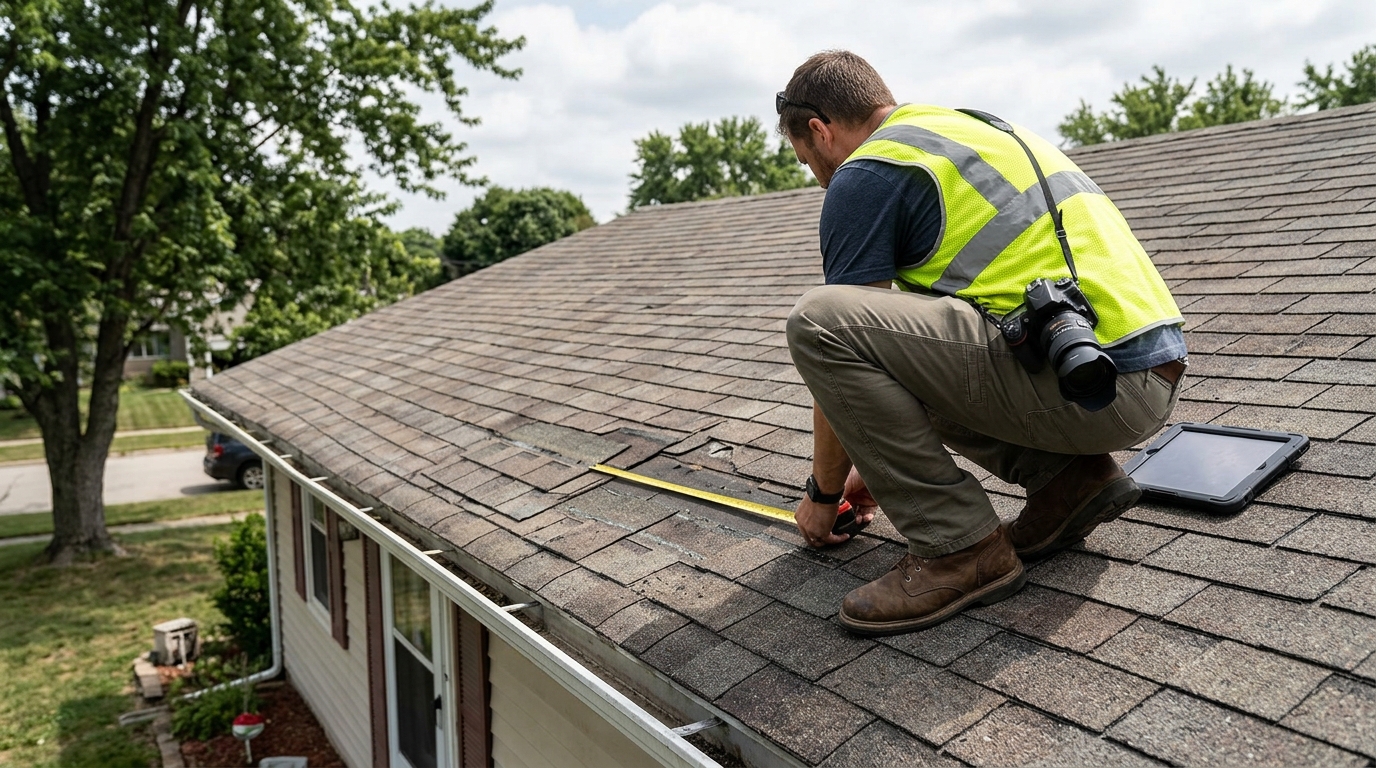
- Take the adjuster's call and book the inspection. The adjuster typically makes contact within one to three days of filing to arrange an inspection (Progressive, 2023).
- Have the vehicle inspected and get the insurer's estimate in writing, then compare it line by line against your own shop's estimate.
- Receive the written acceptance or denial, then authorise repairs.
- Confirm how payment is issued — to you, to the shop, or jointly with your lienholder — and whether your deductible is being withheld from the cheque.
What the Insurer Does Next
Day ranges below are typical, and the statutory limits are hard deadlines that vary by state and claim type.
| Stage | Typical timing | What governs it |
|---|---|---|
| Claim logged, file number issued | Day 0-1 | Insurer's own intake process |
| Acknowledgement of the claim | Day 1-15 | 15 days under the NAIC model regulation (1997); 15 calendar days in Texas (§542.055); 10 business days in Minnesota (§72A.201); 24 hours after the next business day for Florida electronic PIP claims |
| Adjuster contacts you to arrange inspection | Day 1-3 | Industry practice (Progressive, 2023) |
| Inspection, estimate, liability investigation | Day 3-30 | Depends on witness availability, police report release and disputed fault |
| Written notice if more time is needed | By Day 45, then every 45 days | NAIC model regulation (2024 chart) |
| Written acceptance or denial | Day 21-90 | 21 days after properly executed proofs of loss (NAIC model, 1997); 15 business days after all items received in Texas (§542.056); 40 days in California, extendable to 80 if arson is suspected (Cal. Ins. Code §§790.03 et seq.); 90 days for Florida PIP |
| Payment after acceptance | 5-30 days | 5 business days in Texas (§542.057); 5 business days on an agreed settlement in Minnesota (§72A.201); 30 days after acceptance in California |
Two written documents matter most. The first is the delay notice: if the investigation runs long, the insurer must tell you in writing why, within 45 days of receipt and every 45 days after that (NAIC, 2024). The second is the denial letter. Under the NAIC model regulation, no insurer may deny a claim on the grounds of a policy provision, condition or exclusion without referencing it (1997). If a denial arrives without a quoted clause, ask in writing for the clause and the facts applied to it.
Common Reasons Claims Get Reduced or Denied
- Late notice under the policy's notice-and-cooperation condition. Every auto policy conditions coverage on reporting the accident within the stated window, and failing to report is one of the most common grounds for denial (CarGurus). Most states give two to three years to sue under the statute of limitations, but notice to the insurer is required far sooner (FindLaw). What would have changed it: calling the claims line the same day and logging the police report within the one-to-three-day window many states set.
- Coverage lapse on the date of loss. If the premium went unpaid and the grace period expired before the crash, the policy was not in force and no coverage attaches, regardless of fault. What would have changed it: confirming reinstatement in writing, with an effective date earlier than the accident.
- Pre-existing damage excluded from the loss. Insurers reduce or refuse payment by arguing a dent, scrape or prior repair predates this accident — the same argument used against diminished value claims, where carriers say the repair fully restored the car or the car had prior damage (Ohio law office summary). What would have changed it: dated photographs of all four sides of the vehicle taken before the crash, plus service records.
- Insufficient or improperly executed proof of loss. The 21-day decision clock under the NAIC model regulation only starts on properly executed proofs of loss (1997), so an incomplete form stalls the file and can lead to closure for non-cooperation. What would have changed it: returning every requested form signed and dated, and keeping the transmission receipt.
- The coverage type was never purchased. A liability-only policy pays for damage you cause to others, not your own vehicle; collision and comprehensive are separate line items on the declarations page. What would have changed it: checking which coverage lines appear on the declarations page before the loss, not after.
- Disputed valuation on a total loss. The insurer's figure comes from comparable sales it selects. What would have changed it: collecting your own comparable listings and service records before the valuation is issued.
Frequently asked questions
What if I disagree with the amount offered?
Most policies contain a right-to-appraisal clause: each side hires an appraiser and the two select a neutral umpire to settle the value (Irvin Legal). It applies only to claims on your own policy, not to a claim against the at-fault driver's insurer. Invoke it in writing, naming the clause and the disputed figure.
I missed my insurer's reporting deadline. Is the claim dead?
Not automatically. File anyway and ask for a written decision. Under the NAIC model regulation, a denial must reference the specific provision relied on (1997), so you will see the exact notice condition. Separately, most states allow two to three years to pursue the claim legally (FindLaw).
The adjuster has gone quiet. What now?
If the investigation extends, the insurer must send written notice of the delay and its reasons within 45 days of receiving the claim, and every 45 days after (NAIC, 2024). If no notice arrives, request it in writing, then file a complaint with your state department of insurance.
Can I claim the value my car lost even after good repairs?
That is a diminished value claim — the gap between pre-accident and post-repair market value (Ohio law office summary). Some insurers use the 17c formula, which caps the base loss figure at 10% of pre-loss value before further adjustment (Experian). Submit an independent appraisal with your demand.
Sources
- National Association of Insurance Commissioners (NAIC) — NAIC Model Laws, Regulations, Guidelines and Other Resources — July 1997 (Unfair Property/Casualty Claims Settlement Practices Model Regulation) (1997)
- gosuits.com — Texas Prompt Payment of Claims Act: Your Rights

Written by
Renata Ibarra
Renata shapes the publication's voice and keeps its coverage honest when markets get loud. She edits with a focus on precision, especially around risk and uncertainty. She also writes occasional essays on how financial language shapes financial behavior.