Finance
How to File a Water Damage Claim, Step by Step
From the first phone call to the sworn proof of loss, here is what your insurer expects from you, by when, and what happens when a date slips.
By Desmond Okafor · Oct 06, 2026 · 9 min read

A water damage claim is won or lost in the first week. Insurers decide these claims on two questions: was the water sudden and accidental, and can you prove it. Everything you gather before the adjuster arrives goes to those two points.
This walkthrough follows the order an insurer actually processes a claim — first notice, inspection, proof of loss, coverage decision, payment — and flags the deadlines that are counted in days, not judgment calls. Reporting windows and some proof-of-loss rules vary by state and by whether your water came from a pipe or from outside the house.
Before You File (checklist)
Gather these before you call. The NAIC tells policyholders to contact the company with their policy number, name, address and phone number and to describe the extent of the damage (NAIC, undated) — you cannot describe the extent from memory.
- Your policy number and declarations page, showing your dwelling and personal property limits and your deductible. Deductible amounts are set by your own policy and vary by carrier, state and the limit you bought — read the figure off the dec page rather than guessing.
- The date and time water first appeared, plus what you did in the first few hours. This single fact decides the sudden-versus-gradual question later.
- Photos and video of every damaged room, wall, floor and item, taken before cleanup or demolition. The NAIC advises taking photos and videos and listing damaged property before meeting the adjuster (NAIC, undated). Timestamped images from the first 24 hours carry more weight than reconstructions.
- A written room-by-room inventory of damaged contents with approximate age and what you paid, so the adjuster is depreciating a list you wrote, not one they estimated.
- The plumber's or restoration company's written diagnosis, naming the failed component and whether the failure was sudden. A one-line invoice saying "burst supply line, kitchen" is worth more than ten photos.
- Mitigation receipts and invoices — extraction, drying equipment, tarps, a hotel night — kept separately from repair costs.
- Two itemized repair estimates from licensed contractors, broken out by trade and room.
- A police or fire report number if the water came from vandalism, a break-in or a fire response, and the neighbor's or HOA's claim number if the water came from another unit.
Step-by-Step Filing Process (steps)
- Stop the water and limit further damage. Every homeowners policy carries a "duties after loss" condition requiring you to protect the property from additional damage; costs you incur doing so are usually reimbursable. Keep the receipts and the failed part itself.
- Call your agent or insurer and open the claim. The Texas Department of Insurance advises contacting your agent or company right away to start the process (TDI, undated). How long you have to report varies by state (NAIC, undated), so ask for your reporting window in days on that first call. Give them the policy number, name, address, phone and the extent of the damage (NAIC, undated), and write down the claim number and adjuster's name.
- Route flood losses to the right policy. Rising water, surface water and storm surge are excluded from homeowners policies and belong to an NFIP or private flood policy. If both applied — a roof leak and a flooded basement — you file two separate claims.
- Document before you demo. Photograph and video everything, then bag and keep damaged flooring, drywall cuts and ruined contents until the adjuster releases them in writing.
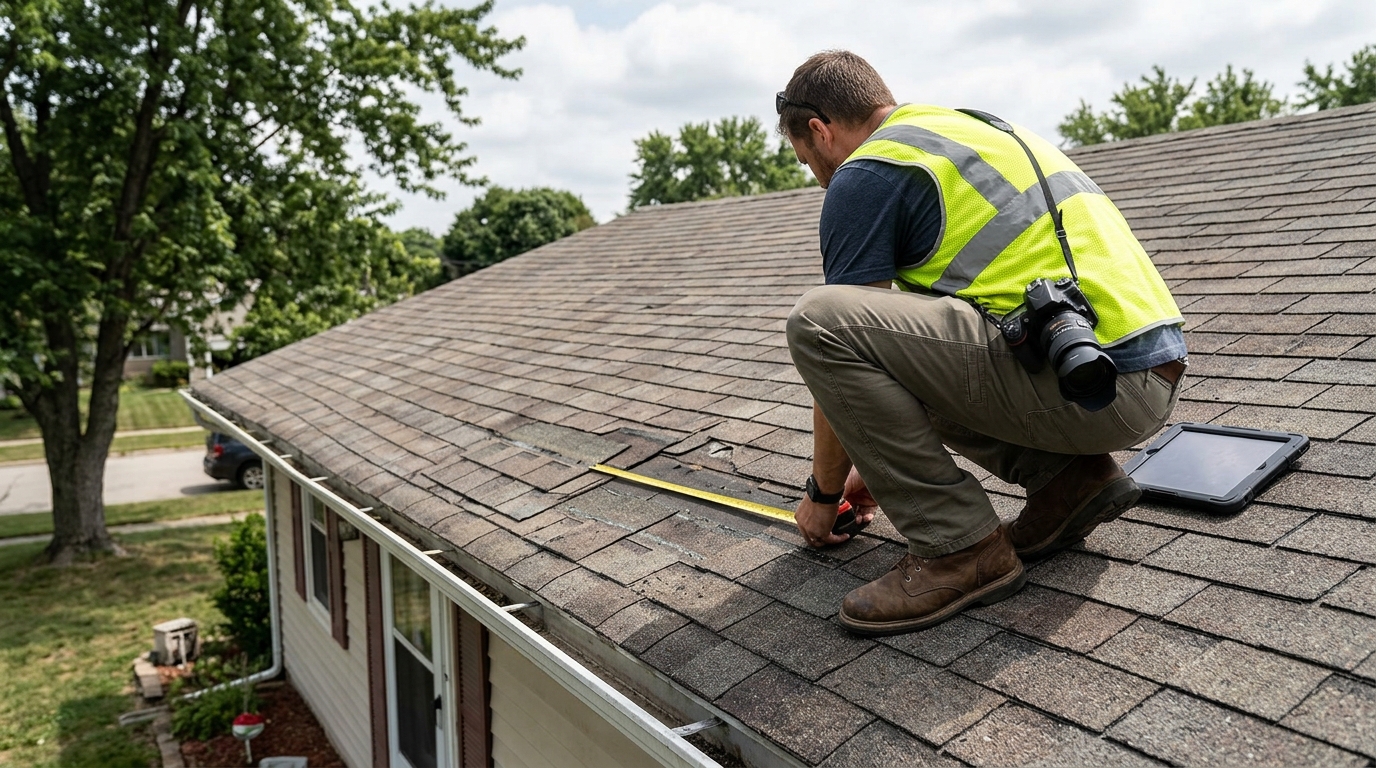
- Complete the inspection. Washington's insurance regulator notes an insurer is not required to send an adjuster to inspect the home (Washington State Office of the Insurance Commissioner, undated). You may be asked for photos, a video walkthrough or a contractor's estimate instead. Walk the adjuster through your inventory list either way.
- Submit the sworn Proof of Loss. Homeowners policies usually require it within 60 days of the insurer's written request, though some policy forms count the 60 days from the date of loss, and commercial property forms commonly allow 90 days (United Law Partners, 2026). NFIP policyholders must submit a signed Proof of Loss within 60 days after the date of loss (FEMA, 2025-01-21) — and FEMA says to file it inside the 60 days even if you disagree with the adjuster's estimate (FEMA, 2025-01-21).
- Review the insurer's written scope and estimate line by line against your contractor bids, and put every disagreement in writing with the claim number in the subject line.
- Take the first payment, then claim the holdback. Replacement cost policies typically pay actual cash value first and release recoverable depreciation after repairs are finished and final invoices are submitted. Ask your adjuster for the number of days your policy form allows to complete repairs.
What the Insurer Does Next (timeline)
Ranges below are typical, not guaranteed; claim-handling timeframes are set by state regulation and by your carrier's own standards, and surge after a regional storm stretches every stage.
| Stage | Typical window | What should happen |
|---|---|---|
| First notice of loss | Day 0-1 | You report; you receive a claim number and the adjuster's contact details |
| Assignment | Day 1-3 | An adjuster or independent adjusting firm takes the file |
| Adjuster contact and inspection | Day 3-10 | Site visit, or a photo/video inspection instead (Washington State Office of the Insurance Commissioner, undated) |
| Scope and estimate issued | Day 7-21 | A written, line-item estimate you can compare to contractor bids |
| Proof of loss | By day 60 | Sworn form filed per your policy clock (United Law Partners, 2026); NFIP counts 60 days from the date of loss (FEMA, 2025-01-21) |
| Written coverage decision | After proof of loss | Approval, partial payment or a denial letter citing the exact provision relied on |
| First payment | Days after acceptance | Actual cash value, less deductible |
| Recoverable depreciation | After repairs | Released on final invoices, within the repair period your form states in days |
Two written notices matter most. The first is the insurer's estimate — if it is only a verbal number, ask for the itemized document. The second is the coverage decision. A denial or partial denial should name the clause: the wear-and-tear exclusion, the flood exclusion, late notice under the duties-after-loss condition. If it does not, request it in writing.
One proof-of-loss quirk: a law firm notes that under North Carolina law, once an insurer receives a written proof of loss it must issue a blank proof-of-loss form within 15 days, and if it fails to, the policyholder is treated as having complied so long as the deadline was otherwise met (Whitley Law Firm, undated). Other states do not all work this way — ask your state insurance department which rule applies to you.
Common Reasons Claims Get Reduced or Denied (list)
- The damage was gradual, not sudden. Insurers deny water claims on the ground that the damage developed over time, treating it as a maintenance issue the homeowner owns (Lawrence Law Offices, undated); coverage typically applies to sudden and accidental water damage and not to damage that develops gradually or results from neglect (ServiceMaster Restore, 2026-01). Instead: report at the first stain or soft spot, and get a plumber's written statement naming the sudden failure and its date.
- Late notice under the duties-after-loss condition. Reporting time varies by state (NAIC, undated). Washington's regulator notes that accidental leaks — a broken washing machine, for instance — are usually covered when reported quickly and the insurer's remediation recommendations are followed (Washington State Office of the Insurance Commissioner, undated). Instead: open the claim the day you find the water, and follow the drying and remediation instructions in writing.
- Proof of loss filed late. Under federal regulation, a proof of loss submitted even one day after the NFIP's 60-day deadline is a valid basis to deny a flood claim (Ward and Smith, P.A., undated). Instead: file the signed form inside the window and note your disagreement on it, exactly as FEMA advises (FEMA, 2025-01-21).
- Wrong peril, wrong policy. Homeowners forms exclude flood and surface water, and sewer or drain backup is usually covered only by a separate endorsement with its own sub-limit. Instead: check whether you carry the backup endorsement and a flood policy before a storm, not after.
- Thin contents documentation. Without an inventory, age and purchase price, contents get depreciated hard or left off the estimate. In a finished basement in a suburban split-level, a soaked sectional and rug might be written as a four-figure line item — but the actual number depends on age, your state's pricing data, your contents limit and whether you have replacement cost or actual cash value. Instead: submit the room-by-room list with photos before the adjuster writes the scope.
- Coverage lapsed on the date of loss. If the premium went unpaid past the grace period your state allows, the policy was not in force when the pipe burst. Instead: confirm the grace period in days with your carrier and keep the policy on autopay.
Frequently asked questions
I disagree with the payout. What do I do first?
Ask for the itemized estimate, then have your contractor write a line-by-line rebuttal with the missing scope. Submit it in writing with your claim number. If that stalls, ask whether your policy has an appraisal clause and file a complaint with your state insurance department. For NFIP denials, a formal FEMA appeal is available within 60 days of the denial (Flood Insurance Guru, 2026).
I missed the proof-of-loss deadline. Is the claim over?
Not automatically on a homeowners policy, but on a flood claim it can be: a proof of loss even one day past the NFIP's 60-day deadline is a valid basis for denial (Ward and Smith, P.A., undated). File the signed form now anyway, request a written extension, and ask your state insurance department what your form's clock was.
No adjuster has come out. Is that normal?
It can be. Washington's regulator states an insurer is not required to send an adjuster to inspect the home (Washington State Office of the Insurance Commissioner, undated). Many water claims are settled on photos, video and a contractor estimate. Send your inventory, images and two itemized bids, and ask in writing how the scope will be verified.
Can I start repairs before the adjuster sees it?
Do the emergency work — extraction, drying, tarping — because your policy requires you to prevent further damage. Hold off on permanent repairs until the scope is agreed. Keep the failed part, keep cut-out sections of flooring and drywall, and photograph everything before removal (NAIC, undated).
Sources
- FEMA — Submit Flood Insurance Proof of Loss Form Within 60 Days of Loss (2025-01-21)
- National Association of Insurance Commissioners (NAIC) — What You Need to Know When Filing a Homeowners Claim

Written by
Desmond Okafor
Desmond covers personal finance with an eye for the small decisions that compound into big outcomes. He's drawn to budgeting tools, debt payoff strategies, and the psychology behind spending. He writes for readers who feel behind and want a clear next step.