Finance
Filing a Claim for a Fallen Tree: What to Do First
Two facts decide most tree claims: whether the tree struck an insured structure, and whether it was healthy and maintained before it came down.
By Tobias Lindqvist · Oct 06, 2026 · 9 min read
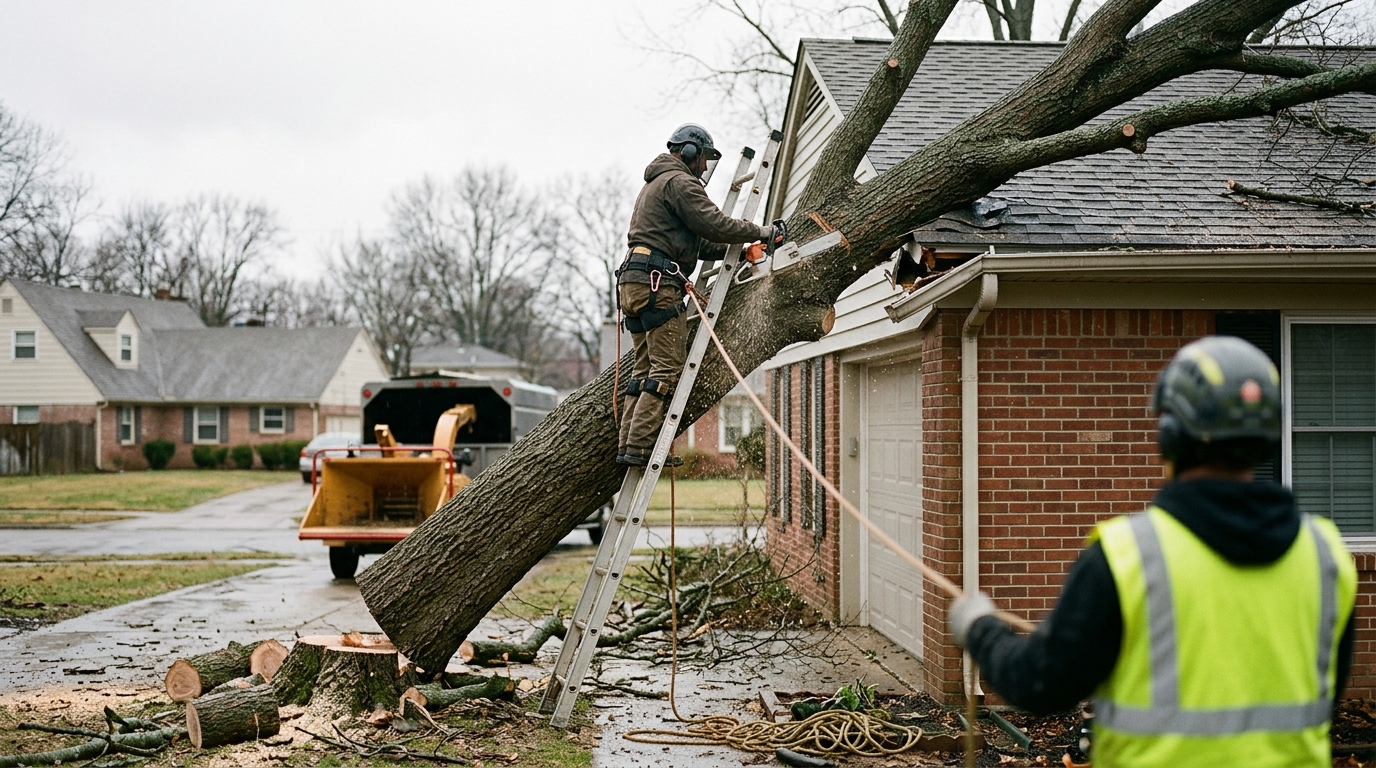
A tree on your roof is a property damage claim, a debris removal claim and, sometimes, a dispute with a neighbor's insurer — and the three are paid under different parts of the policy with different limits. What you do in the first day, before the chainsaws arrive, decides how much of it gets paid.
This walkthrough covers what to gather, the order insurers actually process a claim, how long each stage usually takes, and the policy clauses that cut tree claims back. Deadlines and insurer response times are set by your policy form and your state's insurance code, so the specific numbers below are examples from named sources, not universal rules.
Before You File (checklist)
Gather these before you call. Adjusters work from documents, and the debris will be gone within days.
- Your policy number and the declarations page, showing the dwelling limit, the other structures limit, your deductible, and any separate wind or hurricane deductible.
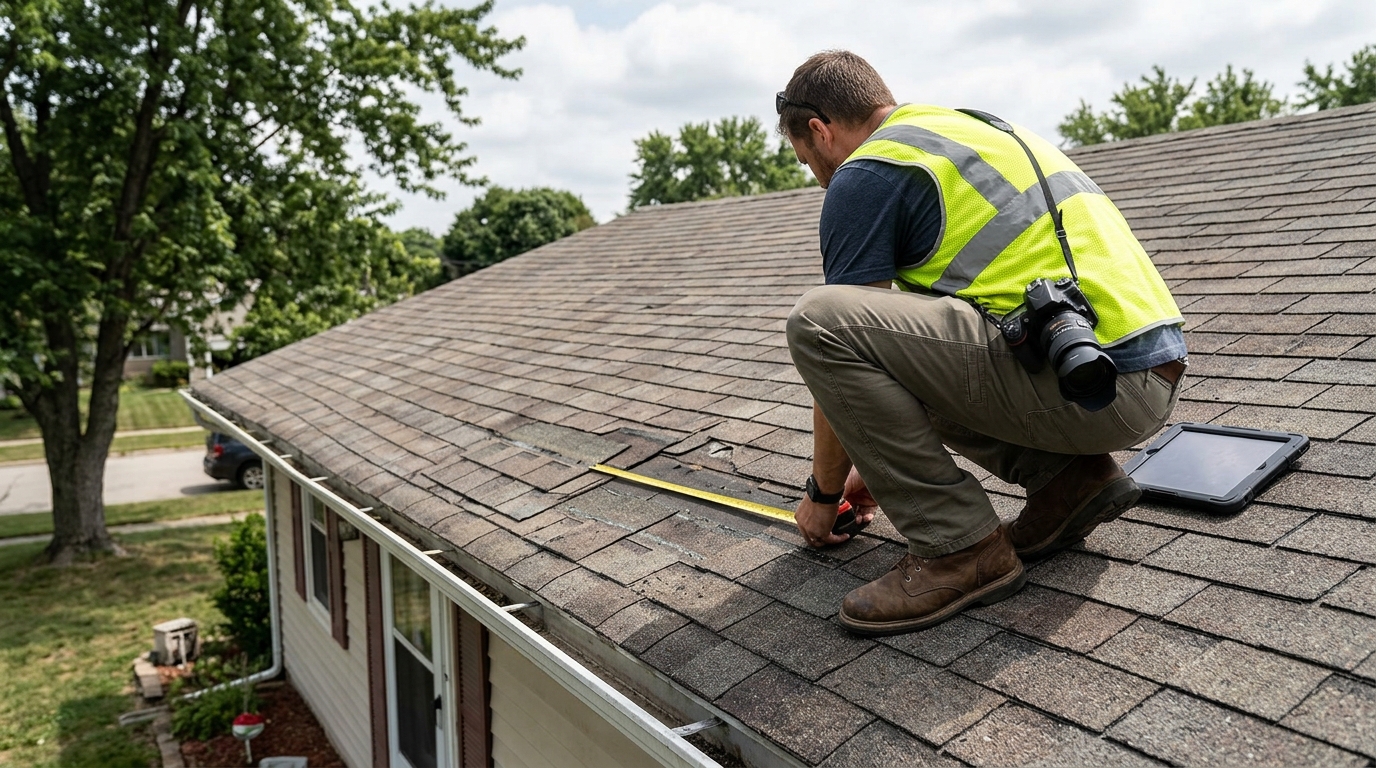
- Photos and video taken within 24 hours, before any cutting: wide shots showing the tree's position on the structure, then close shots of the roof, siding, gutters and any interior water entry.
- Photos of the trunk, stump and root ball. Whether the wood is sound or rotted is the single most contested fact in a tree claim, and it disappears when the stump is ground.
- The date, time and source of the weather event — a windstorm, hail, or the weight of ice, snow or sleet are all covered perils for tree-strike damage under standard homeowners policies (Insurance Information Institute, 2008-04-29).
- A contents list for anything damaged inside: item, brand, model, approximate purchase date, and receipts or card statements if you have them.
- Two written estimates, itemized separately — one from a tree service for removal, one from a roofer or general contractor for structural repair. Keep removal on its own line; it is paid under a different, smaller limit.
- Receipts for emergency work such as tarping, boarding or a hotel night. Your policy requires you to prevent further damage, and these costs are usually reimbursable under that same duty.
- The neighbor's name, address and insurer if the tree came from their property, plus copies of any letter or text you sent them about a dead or leaning tree.
Step-by-Step Filing Process (steps)
- Stop further damage first. Tarp the opening, shut off water or power to a damaged area, and photograph what you did. Keep every receipt.
- File with your own insurer, even if the tree grew in a neighbor's yard. It does not matter whose property the tree was on; if it lands on your home, you file on your own policy (Insurance Information Institute, 2008-04-29).
- Report the loss by phone, app or the carrier's online form and write down the claim number, the representative's name and the date. Your policy sets the outer filing window — in Texas, most homeowner forms require a claim as soon as reasonably possible or within a stated window, often one year from the date of loss (Louis Law Group).
- Complete the first notice of loss form and give the recorded statement if asked. Describe the weather event and the tree's condition in the same words you can support with photographs.
- Schedule the adjuster inspection and be there. Hand over your itemized estimates at the inspection rather than mailing them later.
- Submit the sworn proof of loss when the insurer requests it. Most homeowners forms require it within 60 days of the insurer's written request, though a minority count 60 or 90 days from the date of loss itself (United Law PA, 2025-12-17). A federal Standard Flood Insurance Policy generally requires it within 60 days of the date of loss (United Law PA, 2025-12-17), and commercial property forms commonly allow 90 days (United Law PA, 2025-12-17). In Texas, most forms set 60 to 91 days from the request (United Law PA, 2025-12-17).
- Read the settlement breakdown line by line against your estimates. Check the removal line separately: tree removal after a strike on an insured structure is generally covered only up to about $500 to $1,000, depending on the insurer and policy type (Insurance Information Institute, 2008-04-29).
- File a supplemental claim or invoke the appraisal clause if the estimate is short, and ask in writing whether the carrier is pursuing the neighbor's insurer. Where the tree was in poor health or poorly maintained, your insurer may subrogate against the neighbor's carrier, and a successful recovery can reimburse your deductible (Insurance Information Institute, 2008-04-29). In Texas, a 61-day pre-suit notice is required before suing over wind, hail and similar weather claims (United Law PA, 2025-12-17).
What the Insurer Does Next (timeline)
Statutory clocks differ by state; the ranges below that are not tied to a statute are typical patterns and stretch when a storm generates thousands of claims at once.
| Stage | Typical timing | What you should see |
|---|---|---|
| Claim acknowledged | Texas requires acknowledgment of a property claim within 15 days (Hoch Law Firm, 2026-07-09); Pennsylvania requires it within 10 working days unless payment is made first (ClaimSpot) | A written or emailed acknowledgment with your claim number |
| Adjuster assigned and first contact | Day 3–10 in ordinary conditions | A call or email to book the inspection |
| On-site inspection | Day 7–21 | Photographs, measurements, a moisture reading if water got in |
| Document requests | Day 10–30 | A written request for the sworn proof of loss, which starts your 60-day clock on most forms (United Law PA, 2025-12-17) |
| Written accept-or-reject decision | In Texas, 15 business days after the insurer has all requested items, with a possible 45-day extension if written notice is sent before the first 15-day limit expires (Hoch Law Firm, 2026-07-09) | A letter accepting the claim with an amount, or a denial letter naming the clause relied on. Keep it; an appeal starts here |
| Payment | In Texas, within five business days of acceptance (Hoch Law Firm, 2026-07-09) | Check or transfer, often split between an actual cash value payment now and recoverable depreciation after repairs |
| Late payment | In Texas, an insurer that takes more than 60 days to pay after receiving all requested information owes statutory interest at 18 percent per year from the 61st day (Hoch Law Firm, 2026-07-09) | Interest added to the payment |
After a declared catastrophe, all Texas Prompt Payment of Claims Act deadlines extend by an additional 15 calendar days (Hoch Law Firm, 2026-07-09). Other states run their own clocks — your state insurance department publishes them.
Common Reasons Claims Get Reduced or Denied (list)
- The tree was dead, diseased or rotting. The maintenance and neglect exclusion means a homeowners policy likely won't cover damage caused by a neglected or rotting tree (Allstate). Where a neighbor was negligent in removing a dead or diseased tree, the claim shifts toward their liability coverage (Insurance.com). Instead: document the sound wood at the break, and keep dated arborist invoices showing the tree was inspected or trimmed.
- No insured structure was hit. Removal of a fallen tree that caused no structural damage, and removal of dead or diseased trees, is not paid (Insure.com; Allstate). Instead: before paying a crew, confirm in writing whether the strike on your shed, fence or detached garage qualifies under the other structures limit.
- The removal bill exceeded the sublimit. For a 60-foot oak dropped on a suburban ranch roof, a crane-assisted removal can be quoted in the thousands, while the policy's removal allowance generally runs about $500 to $1,000 depending on insurer and policy type (Insurance Information Institute, 2008-04-29). Instead: get the removal and repair quoted on separate invoices so repair costs are not absorbed into the small removal line.
- You claimed the tree itself under the wrong peril. Damage to trees and shrubs is covered under a named-peril clause — fire, lightning, explosion, theft, aircraft, vehicles, vandalism and malicious mischief — generally limited to 5 percent of the dwelling amount, with most insurers capping about $500 for any one tree, shrub or plant (Insurance Information Institute, 2008-04-29). Wind is not on that list for the plant itself. Instead: claim the damage the tree did to the structure, which is covered for windstorm, hail and weight of ice, snow or sleet (same source).
- Late notice or a missed proof of loss. Texas forms commonly require reporting within a stated window, often one year from the date of loss (Louis Law Group), and most forms require the sworn proof of loss within 60 days of the insurer's written request (United Law PA, 2025-12-17). Instead: calendar the proof of loss date the day the request arrives and send it signed and notarized, even if some figures are marked as estimated.
- Coverage lapsed on the loss date. A policy cancelled for non-payment before the storm covers nothing, regardless of damage. Instead: confirm the in-force date on the declarations page before filing, and set autopay if the renewal premium date falls near storm season.
Frequently asked questions
What if I disagree with the payout amount?
Ask for the adjuster's line-item estimate and compare it against your contractor's. Submit a supplemental claim with the missing line items and photos. If that fails, most homeowners policies contain an appraisal clause letting each side name an appraiser. You can also file a complaint with your state insurance department.
What if I already cleared the debris before photographing it?
File anyway and reconstruct the record: ask the tree crew for dated photos, their written work order describing the trunk condition, and a disposal receipt. Neighbors' doorbell camera footage and local news storm coverage for that date also help. Do not grind the stump until the adjuster has inspected it.
The tree was my neighbor's — do I get my deductible back?
Possibly. Your insurer may pursue the neighbor's insurer through subrogation, particularly where the tree was in poor health or not properly maintained, and a successful recovery can reimburse your deductible (Insurance Information Institute, 2008-04-29). Ask your adjuster in writing whether subrogation has been referred, and send them any warning letter you gave the neighbor.
The insurer has gone quiet — what can I do?
Send a dated written request for the claim status and a list of any outstanding documents. In Texas, an insurer taking more than 60 days to pay after receiving all requested information owes 18 percent annual interest from the 61st day (Hoch Law Firm, 2026-07-09). Other states set their own response rules through the insurance department.
Sources
- Insurance Information Institute — If a Tree Falls on Your House, Are You Covered? (2008-04-29)
- Allstate — If a fallen tree damages my house, does homeowners insurance cover it?

Written by
Tobias Lindqvist
Tobias tracks central banks, currencies, and the slow-moving forces behind interest rates. He's skeptical of easy narratives and prefers to follow the data where it leads. His writing often zooms out when everyone else zooms in.